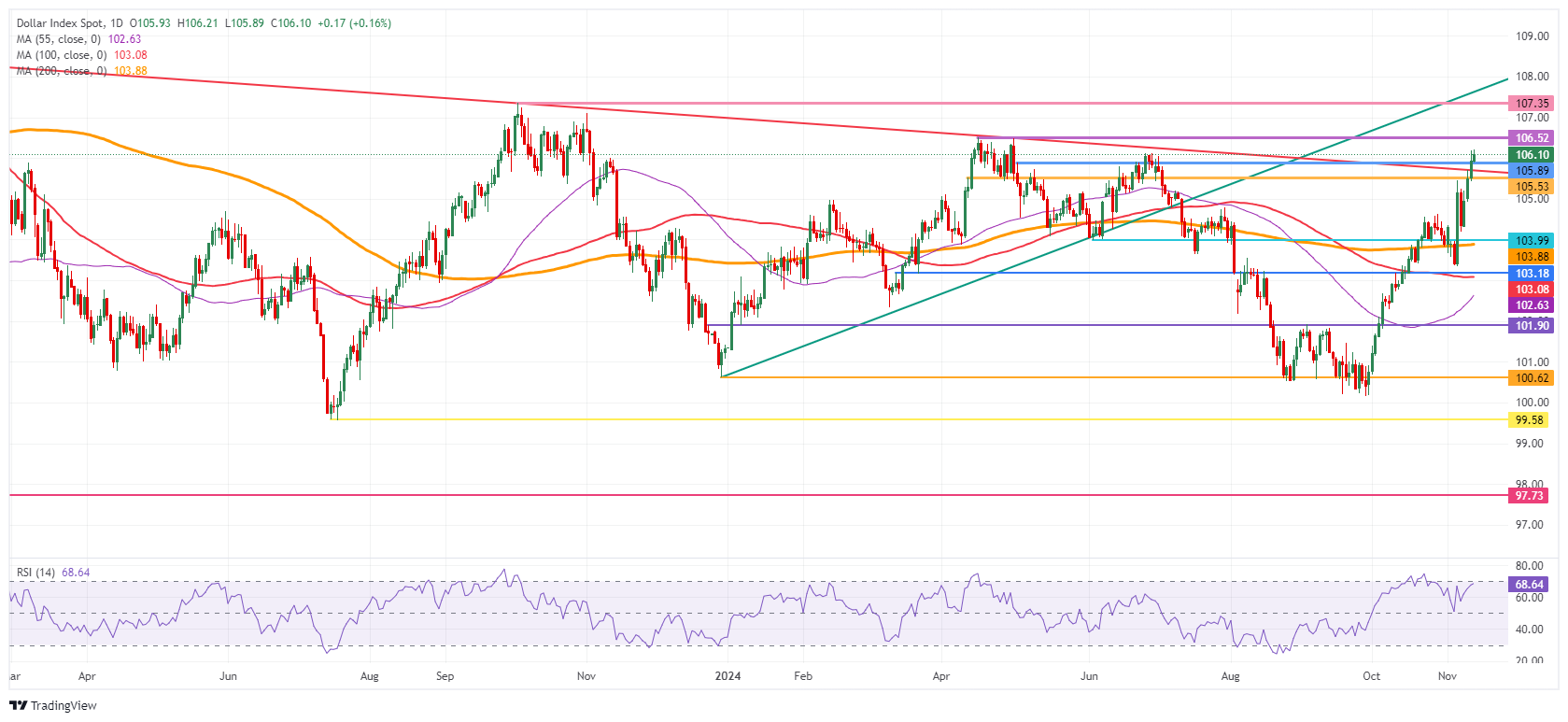
In practical terms, trading in the foreign exchange market involves the simultaneous exchange of two currencies—one being bought and the other sold. This structure reflects the fact that currency values are always relative: a currency has no standalone price but only a price relative to another currency. For this reason, FOREX instruments are always listed as currency pairs, such as EUR/USD, GBP/JPY, or AUD/CAD. The first currency in the pair is referred to as the base currency, while the second is the quote (or counter) currency.
To illustrate, consider the popular currency pair EUR/USD. If the market quotes EUR/USD at 1.1050, it means that one euro is worth 1.1050 US dollars. When a trader expects the euro to appreciate relative to the US dollar—perhaps due to strong European economic data or expectations of higher European interest rates—they may choose to go long EUR/USD. In doing so, they are effectively buying euros and selling dollars. Conversely, if they believe the euro will weaken, they may go short, selling euros and buying dollars with the expectation of repurchasing them at a lower price.
This structure allows traders to participate in both upward and downward price movements—a unique characteristic that distinguishes FOREX from certain traditional investment markets where profit opportunities might be more limited or dependent on rising asset values.
Pricing Mechanics: Pips, Spreads, and Execution
Prices in the FOREX market are typically quoted to the fourth or fifth decimal place (for example, 1.10508), reflecting the fine granularity at which currencies trade. The smallest standard unit of price movement is known as a pip (percentage in point). For most currency pairs, a pip corresponds to a movement in the fourth decimal place. Thus, if EUR/USD moves from 1.1050 to 1.1060, it has moved 10 pips. In the case of Japanese yen pairs (e.g., USD/JPY), prices are quoted to two or three decimal places, and a pip corresponds to the second decimal place.
Pips are more than just numerical increments—they are the fundamental unit through which profit and loss (P&L) are calculated. For example, a trader who buys EUR/USD and sees the price rise by 20 pips may achieve a meaningful profit depending on the size of their position. Conversely, a 20-pip decline could result in a loss of similar magnitude.
Every trade consists of two prices:
- Bid: the price at which the broker will buy the base currency from the trader.
- Ask: the price at which the broker will sell the base currency to the trader.
The difference between these two prices is known as the spread, and it represents a key component of transaction costs in FOREX. Tight spreads—common in major currency pairs like EUR/USD or USD/JPY—indicate high liquidity and lower trading costs. Wider spreads, typical of exotic currency pairs, reflect lower liquidity and greater market risk.
Leverage and Margin: Amplifying Both Potential and Risk
A defining characteristic of FOREX trading, especially in retail markets, is the use of leverage. In essence, leverage allows traders to control positions many times larger than the capital they deposit. This deposited amount is known as margin, a form of collateral that ensures the trader can cover potential losses.
For example, with leverage of 1:100, a trader with $1,000 in margin can control a position worth $100,000. This magnification enables meaningful profit opportunities even from small price movements. However, the same principle applies to losses: a small adverse movement in price can rapidly reduce available capital. If losses become too large relative to the margin, the broker may issue a margin call or automatically close the position to prevent the account from going negative.
Leverage is often misunderstood by beginners. Rather than treating it as a tool to increase gains, it should be approached as a mechanism that increases exposure to risk. Sustainable trading requires careful position sizing, conservative use of leverage, and a clear awareness of worst-case scenarios.
Trading Infrastructure: Platforms, Tools, and Technology
FOREX trading is conducted primarily through electronic trading platforms offered by brokers. These platforms serve as the trader’s interface with the global market and typically include:
- Real-time price charts (candlestick, line, bar charts)
- Technical indicators (moving averages, RSI, MACD, Bollinger Bands, etc.)
- Order entry tools (market orders, limit orders, stop-loss orders, take-profit orders)
- Risk management features (position size calculators, margin indicators)
- News feeds and economic calendars
Advanced platforms also offer algorithmic trading capabilities, allowing traders to automate strategies based on predefined rules.
While technology provides access, speed, and analytical tools, it is not sufficient on its own to ensure trading success. The platform merely facilitates decision-making—it does not make decisions for the trader.
Effective FOREX trading requires:
- a coherent methodology,
- a structured risk management framework,
- and disciplined emotional control.
Beginners often overestimate the role of technical tools and underestimate the importance of psychology and strategy. Successful traders use technology not as a crutch, but as a complement to sound analytical reasoning and well-defined execution rules.
Bringing It All Together
In practical terms, the functioning of the FOREX market can be summarized as a combination of price quotation mechanics, leveraged trading dynamics, and digital infrastructure. Traders engage with a highly liquid, rapidly changing marketplace, where decisions must account for economic indicators, market sentiment, and risk exposure.
Understanding these elements is essential before advancing to more complex topics such as fundamental analysis, technical strategies, or algorithmic trading.